
- info@selfchec.org
Powered by Google  Translate
Translate Men’s
Breast Cancer

Risk Factors

Men’s breast cancer is cancer that forms in tissues of the breast in men. Most male breast cancer begins in cells lining the breast ducts.
It’s very rare and usually affects older men. Following is a list of men’s breast cancer risk factors:
Age increases the risk of breast cancer.
Having the BRCA2 or BRCA1 gene mutation, or having a close relative with the mutation, raises a man’s lifetime risk from about 1 percent to about 7 percent.
Having a family history of breast cancer—especially if it was diagnosed at age 40 or younger.
Radiation exposure.
Increased estrogen levels, from heavy alcohol use, cirrhosis or Klinefelter syndrome.
Practice early detection. Learn to do a breast self-check every month and ask your health professional to include a breast exam in your annual doc-check.
Age Guidelines
Men At Higher Risk Should Begin Earlier
Men at any age may develop breast cancer, however it is usually detected in men between 60-70 years old.
Men At Higher Risk For Breast Cancer
Beginning at age 35, make an appointment with your health professional for a clinical breast exam every 6 to 12 months.
Men At Normal Risk
Usually at age 40, talk to your health professional about the appropriate age to start your mammograms. Results of your first mammogram will help determine the timing of future mammograms.
Beginning at age 40, do a monthly breast self-check at the same time you do your testicular self-check and skin self-check.
.jfif)
How To Do Your Self-Check

Men’s how to self-check your breasts is not that different than how a woman does her self-check. You just need to get used to the idea that you can also get breast cancer, and touching yourself needs to become a natural part of your “taking care of yourself” every month routine. You’re lucky in one respect, male breast tissue is much thinner than female breast tissue, so it’s easier and takes less time for a man to check himself.
Self chec thinks it’s important for you to know what a breast self-check looks like and has included the following video. Please click on the image to your left.
To Be Effective, Breast Cancer Early Detection Must Combine
1) Your monthly breast check.
2) Your yearly doc-check.
3) Yearly mammogram if over age 40 or sooner if you’re in a Higher Risk group.
Signs And Symptoms
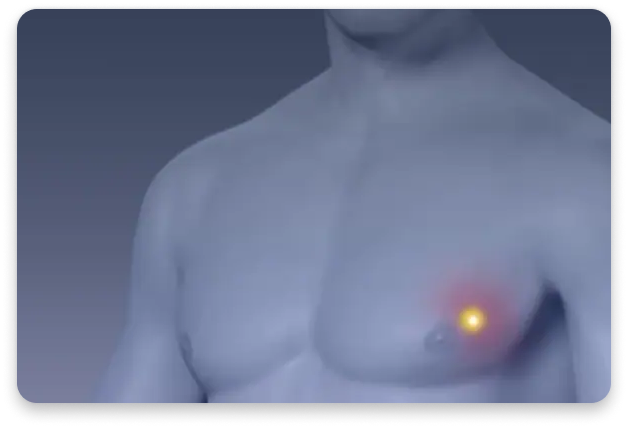
You’re probably not used to visually checking your breasts, but by now you need to know that it’s important to become aware of the men’s breast cancer signs and symptoms. So let’s start. You need to be looking for any changes that do not seem normal to you including:
- Lumps
- Puckering
- Thickening
- Dimpling
- Rash
- Nipple discharge
- Swollen lymph nodes
Call your healthcare professional if you see any changes. If you are not sure, call the doc anyway!
Reduce Your Chances Of Getting Breast Cancer

Although the medical community has not come up with the definitive reasons why some men are diagnosed with breast cancer, they do recommend practicing the following healthy habits to help men reduce their chances of getting breast cancer.
Click on each topic below:
Practice early detection (don’t wait to get that lump checked out by your health professional)
Resources: Mayo Clinic, Cancer.net, Susan Komen and BreastCancer.org
Frequently Asked Questions
.gif)
Men’s breast cancer prevention and early detection is important. For every 100 women with breast cancer there will be one man, but you don’t want to be that one. Click the frequently asked questions below for more information.
Now is the time to find out if you have any risk factors. You’ll be surprised to find out what some men’s breast cancer risk factors are. Read more
Men with a “higher risk” should start checking earlier than the breast cancer guidelines suggest. Read more…
A health professional shows one man how to do his breast self-check in this video. Read more
Review the list of signs and symptoms to watch out for. Remember, not every sign or symptom means you have breast cancer. Read more
This page will put you on the right track to taking the proactive steps you need for men’s breast cancer prevention and early detection so you can keep your breasts and yourself healthy. Read more
.png)